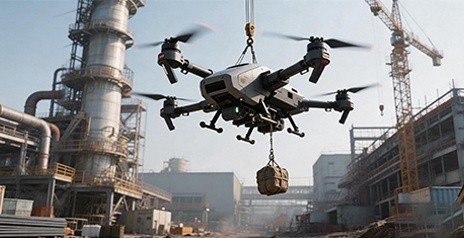



Single-cell 3.7V, soft aluminum-plastic film packaging, custom-cuttable, ultra-high-rate discharge 20C~100C, instant high-current output, meeting the peak power consumption requirements for drone takeoff, rapid ascent, and hovering.
Voltage S Specification (Series Count)
2S (7.4V): Mini toy drone, handheld aerial camera.
3S (11.1V): Mainstream consumer-grade aerial drones (DJI and others) (Most common).
4S/6S (14.8V/22.2V): FPV racing drones, heavy-duty industrial multirotors.
Capacity: 1500 to 5000 mAh for aerial drones, single unit weight 100 to 300 g, single unit endurance 25 to 35 minutes.
1. Lithium ternary battery NCM (Long Hang Industry / Surveying and Mapping Drone)
Energy density: 280~400Wh/kg, excellent low-temperature performance (stable discharge from -40°C to +60°C), suitable for inspection, surveying, and long-endurance drones such as composite-wing drones, with a flight time of up to 2~4 hours.
2. Lithium Iron Phosphate (LiFePO4) (Plant Protection / Heavy-Duty Logistics Drones)
High safety, over 1,500 charge cycles, shock-resistant, ideal for fully loaded spraying in agricultural drones and large cargo drones. Disadvantages include relatively low energy density and higher self-weight.
3. Four Core Applications of Lithium Batteries in Drones
Full machine power supply (most critical)
Supply high-power power to brushless motors and electronic speed controllers: Instant current surge up to 30 times the rated value during takeoff, enabling heavy load ascent and wind-resistant hovering with high-rate lithium batteries. Stable voltage output during cruising prevents sudden voltage drops and flight crashes.
Power supply for airborne equipment
The gimbal, video transmission, GPS, obstacle avoidance radar, camera, and intercom are all powered by the Power Battery through voltage division, with the intelligent BMS board distributing multiple regulated power supplies.
Intelligent Power Management (Standard with DJI Smart Battery)
Built-in BMS Protection Board: Overcharge, over-discharge, overcurrent, and high-temperature short-circuit protection; Smart self-discharge: Automatically reduces to 60% storage voltage when idle for extended periods to prevent swelling and failure; Battery chip transmits remaining capacity, temperature, and cycle count to the flight controller for precise calculation of remaining flight range.
Low-temperature / Extreme Environment Adaptation
Specialized wide-temperature lithium batteries can operate in extreme conditions, functioning at -35°C in frigid mountainous areas and 60°C in desert heat. These low-temperature modified lithium batteries, designed for polar inspections and forest fire prevention drones, effectively address the issue of capacity drop at low temperatures.
4. Product Advantages
Lightweight and high energy density: significantly lighter than nickel-metal hydride and lead-acid batteries at the same capacity, directly improving range and payload capacity by reducing weight.
Fast charging feature: 0.5C fast charging, 30-60 minutes to full charge, enhancing work efficiency.
Low self-discharge: Monthly power consumption <5%, backup battery can still power up normally after being stored for several months.